Petra Franke · 3 September 2026
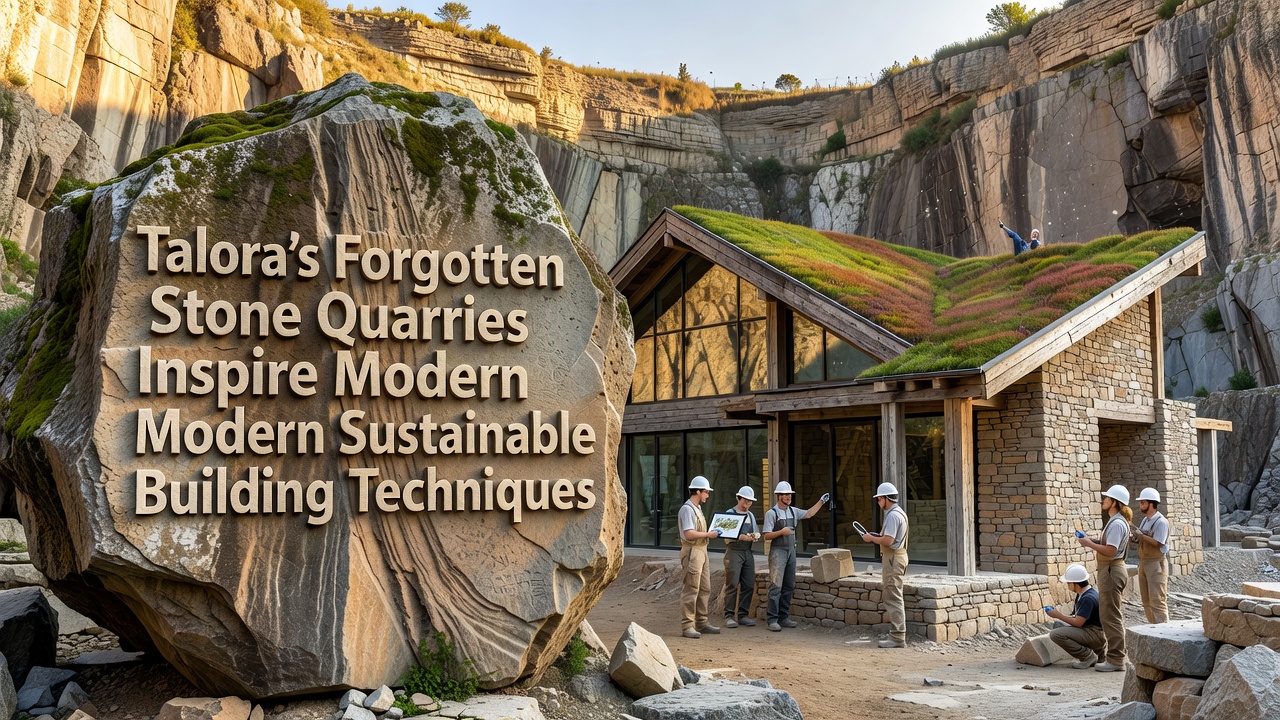
Talora's Forgotten Stone Quarries Inspire Modern Sustainable Building Techniques
Abandoned quarries around Talora once supplied local builders with limestone and marble blocks for centuries, yet industrial shifts left many sites idle by the mid-20th century. Recent surveys conducted by regional heritage groups have mapped over 40 such locations, revealing intact stone reserves alongside traces of traditional extraction methods that relied on manual tools and animal power. These findings have drawn attention from architects and engineers who study how historical practices align with contemporary goals for lower-emission construction materials.
Data from geological assessments show that Talora's stone deposits feature low porosity and high compressive strength, properties that reduce the need for chemical treatments in modern applications. Researchers at the University of Bologna documented extraction patterns dating back to Roman-era operations, noting that waste stone from those periods was often repurposed for road base or lime production rather than discarded. Such closed-loop approaches mirror current circular economy models promoted by the European Commission, which track material flows across construction sectors in member states.
Historical Extraction Methods and Material Properties
Workers in Talora quarries employed wedge-and-feather techniques to split blocks along natural fissures, a process that minimized micro-fractures compared with later mechanized blasting. Records preserved in local archives indicate annual output peaked in the 1800s at roughly 12,000 cubic meters before declining sharply after World War II. Core samples analyzed by material scientists reveal consistent mineral composition across layers, with calcium carbonate content exceeding 95 percent in many seams, which supports durability in load-bearing walls and facade cladding without additional stabilizers.
And yet the same geological stability that preserved these reserves also limited commercial revival until sustainability metrics began influencing procurement decisions. Engineers now calculate that sourcing stone within a 50-kilometer radius can cut transport-related carbon dioxide emissions by up to 40 percent relative to imported aggregates, according to lifecycle analyses published in the Journal of Cleaner Production.
Integration into Contemporary Projects
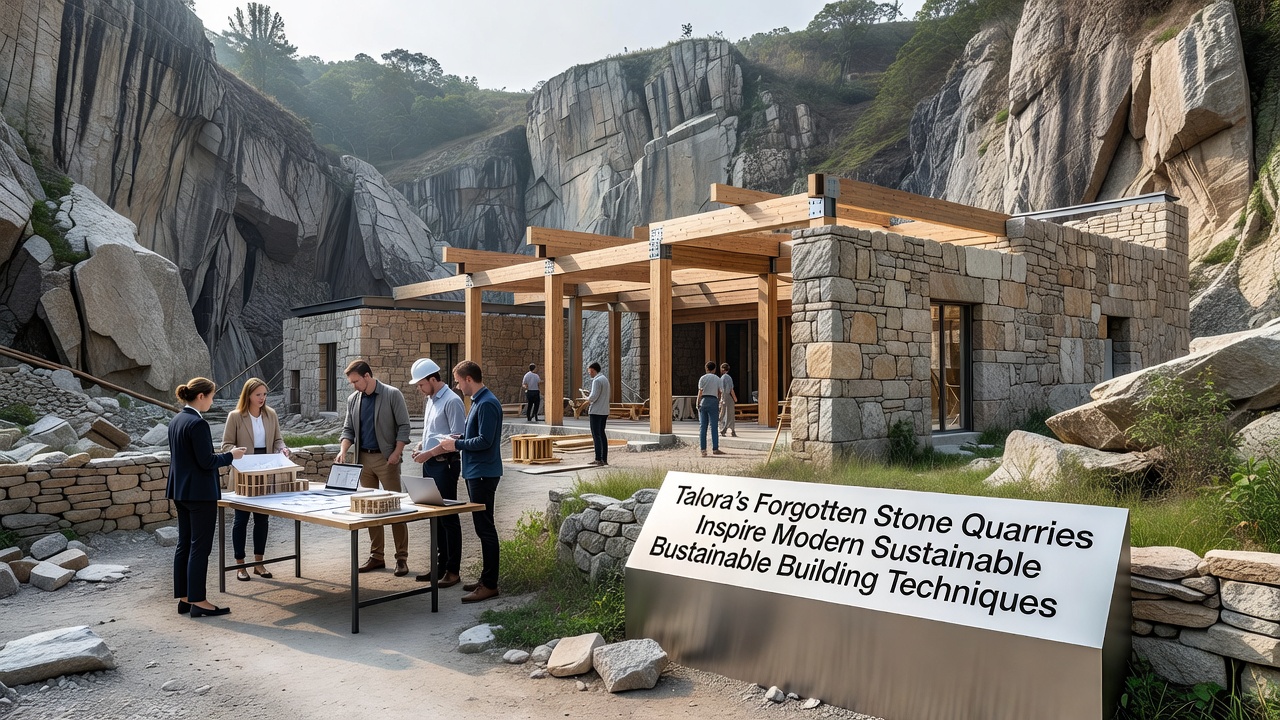
Construction firms in northern Italy have begun specifying Talora-sourced blocks for public buildings and residential developments where thermal mass contributes to passive temperature regulation. One project completed in 2023 used reclaimed quarry waste as aggregate in concrete mixes, achieving a 15 percent reduction in virgin cement content while meeting EN 206 strength standards. Planners preparing for the International Sustainable Building Symposium scheduled for September 2026 in Milan have listed Talora quarry tours as optional site visits, allowing attendees to examine in-situ examples of adaptive reuse.
What's interesting here is how digital scanning technologies enable precise matching of new cuts to original block dimensions, preserving visual continuity in restoration work. Photogrammetry surveys performed by regional agencies produce three-dimensional models that guide CNC cutting equipment, ensuring minimal offcut waste during fabrication. These workflows integrate directly with building information modeling platforms used by firms across the EU and Australia, where similar quarry reactivation studies have been underway since 2018.
Regulatory and Environmental Context
Italian national guidelines on resource efficiency, updated in 2022, classify former quarry sites as potential sources for certified secondary raw materials when environmental impact assessments confirm stability. The Australian Department of Climate Change, Energy, the Environment and Water has referenced comparable limestone reuse programs in its 2024 sustainable procurement handbook, highlighting transport savings achieved through localized supply chains. Observers note that permitting processes for quarry reactivation now require biodiversity offset plans, a step that has extended project timelines but also encouraged habitat corridor creation around worked faces.
Figures released by the Italian National Institute of Statistics indicate that construction sector demand for domestically extracted stone rose 8 percent between 2021 and 2024, driven in part by updated energy performance directives that reward high thermal inertia materials. Universities in Canada have contributed peer-reviewed models showing that thick stone masonry can lower annual heating loads by 12 to 18 percent in temperate climates when combined with appropriate insulation layers.
Challenges in Scaling Adoption
Logistical hurdles remain, including the need to upgrade access roads that have deteriorated since active quarrying ceased. Equipment operators must adapt modern diamond wire saws to the irregular faces left by historical methods, which can increase setup time by 25 percent according to field reports from contractors. Training programs offered through vocational institutes in the Talora region now include modules on heritage extraction documentation so that future work preserves archaeological context.
Yet progress continues as pilot grants from regional development funds support equipment sharing among small operators. These arrangements allow multiple sites to coordinate extraction schedules, balancing output with ecological monitoring requirements that track dust, vibration, and groundwater levels throughout active phases.
Conclusion
Revived interest in Talora's stone quarries demonstrates how historical resource sites can supply verified materials that meet present-day performance and regulatory criteria. Continued mapping, material testing, and cross-sector collaboration will determine the extent to which these reserves contribute to broader construction supply networks in coming years.