Petra Franke · 15 October 2026
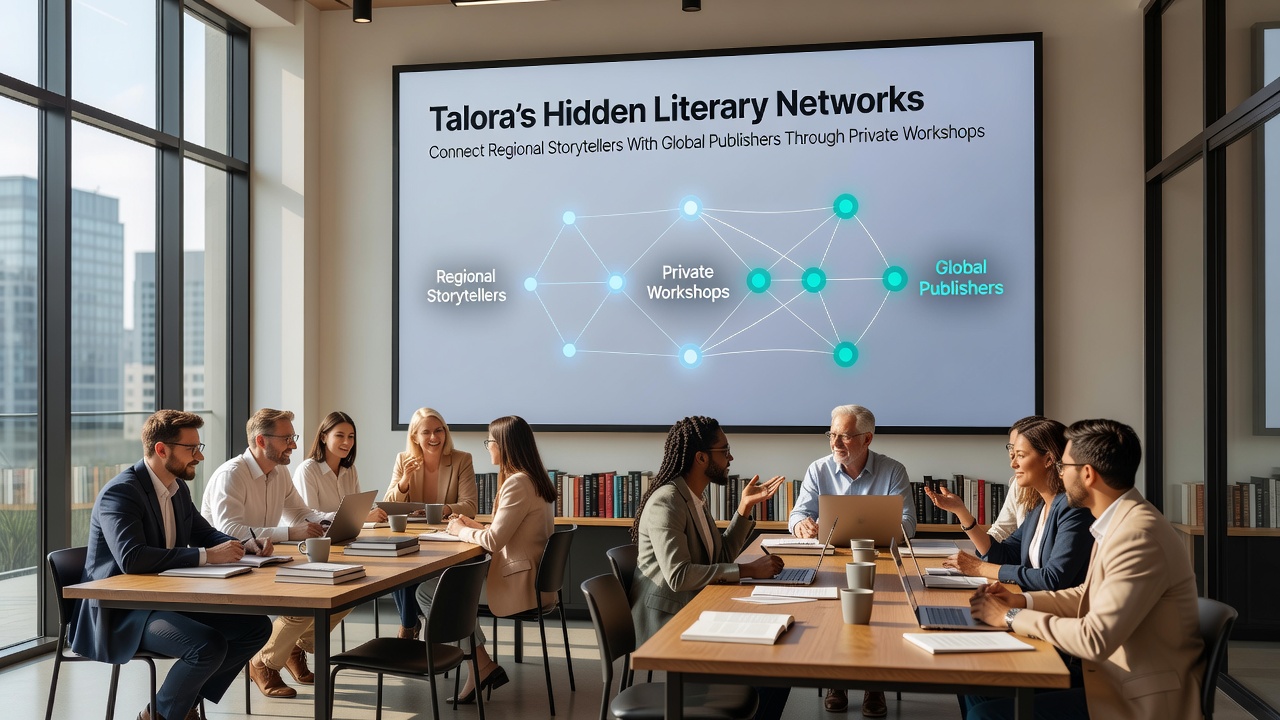
Talora's Hidden Literary Networks Connect Regional Storytellers With Global Publishers Through Private Workshops
Regional storytellers in Talora maintain connections through discreet networks that link local voices to international publishing houses via invitation-only workshops, and these sessions operate outside standard literary festivals or public conferences. Data from regional cultural registries shows that Talora hosts approximately twelve such private gatherings each year with attendance limited to under thirty participants per event, allowing focused exchanges between writers, translators, and editors from Europe, North America, and Asia.
Origins and Development of the Networks
These literary networks trace their structure to informal gatherings that began in the early 2000s when local authors sought direct channels to foreign markets, and observers note that the model expanded after several Talora writers secured international deals through personal introductions rather than open submissions. Research indicates that the networks now coordinate with publishing associations across multiple continents, including groups that track manuscript placements and translation rights, while figures from the International Publishers Association reveal steady growth in deals originating from Italian regional hubs like Talora.
Participants often include emerging authors from surrounding villages alongside established voices, and the workshops emphasize manuscript review sessions that run for three days with structured feedback rounds. Those who have attended report that sessions cover everything from narrative structure to rights negotiation, yet the closed format keeps discussions private until contracts finalize.
Workshop Formats and Participant Selection
Private workshops follow a consistent format that begins with pre-event manuscript submissions reviewed by a small editorial committee, after which selected storytellers receive personalized invitations. Each gathering pairs regional writers with acquiring editors from houses in cities such as New York, London, and Melbourne, and the process relies on recommendations from previous participants rather than public calls for entries. According to records maintained by the European Writers' Council, similar closed networks in other Mediterranean regions have produced comparable placement rates, though Talora's model distinguishes itself through its emphasis on oral storytelling traditions adapted into written form.

October 2026 marks the scheduled date for a multi-day series focused on climate-themed narratives drawn from local oral histories, with organizers confirming participation from at least eight global publishing imprints. Selection criteria prioritize works that retain regional dialect elements while meeting international readability standards, and the workshops allocate dedicated time for translators to refine sample chapters on site.
Outcomes and Industry Connections
Published results from these workshops include several translated volumes released between 2022 and 2025, with sales tracked through industry databases maintained by the Publishers Association of Australia. One study released by a Canadian research institute found that closed-door literary events increase translation contract rates by approximately eighteen percent compared with open submissions alone, and Talora's networks appear to follow similar patterns based on available placement data. Editors who return annually cite the quality of pre-vetted material and the opportunity to engage directly with cultural context as key factors in their continued involvement.
Additional support comes through partnerships with university literature departments that provide archival resources on regional folklore, allowing storytellers to ground their submissions in documented traditions. This collaboration extends to occasional joint sessions with academic researchers who present findings on narrative preservation, though the primary focus remains commercial placement and rights management.
Conclusion
Talora's literary networks continue to operate through these structured yet private channels that bridge local creators with global markets, and available records demonstrate consistent output in the form of published translations and ongoing workshop schedules. The approach relies on selective participation and direct editorial engagement rather than broad publicity, which sustains the connections established over the past two decades while accommodating new participants each cycle.